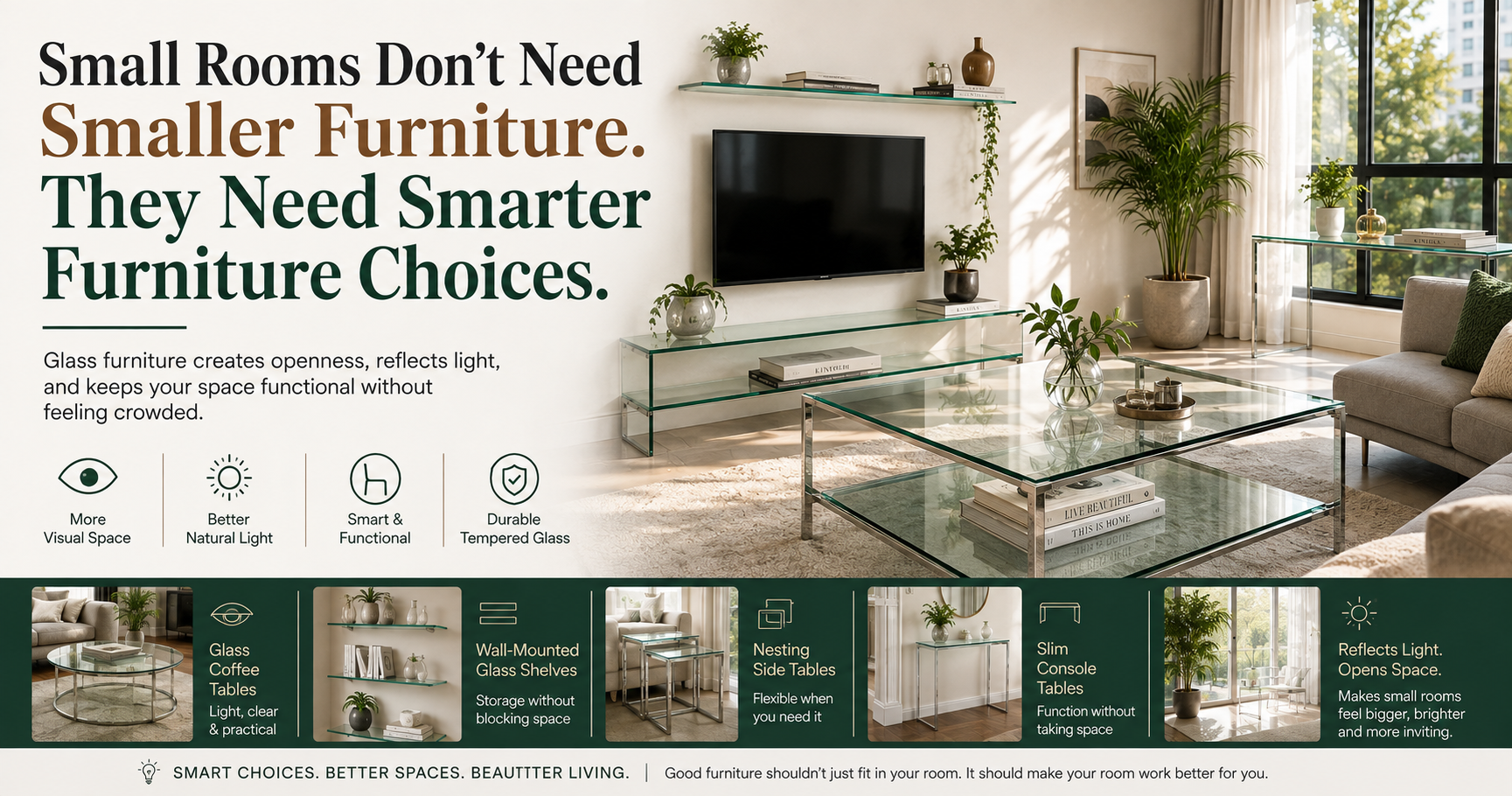
Rewritten Content:
Most people think a small room needs tiny furniture.
From what I've seen, that's usually the wrong approach.
The real issue isn't the size of the furniture. It's how heavy the room feels once everything is inside. A bulky coffee table, a thick wooden bookshelf, and an oversized TV unit can make a perfectly usable room feel cramped within days.
I've seen the same pattern across Pakistani homes and apartments, especially in Karachi where making the most of limited space has become normal. When every square foot matters, visual space becomes just as important as physical space.
One material consistently solves this problem better than most others: glass.
Not because it's trendy. Because it changes how a room feels without taking away functionality.
Why Glass Furniture Makes a Small Room Feel Bigger
A room doesn't have to become physically larger to feel more open.
Glass allows your eyes to travel through the furniture instead of stopping at it. That simple difference creates the impression of extra space.
Compare these two living rooms:
One has a thick wooden coffee table with solid side panels.
The other has a clear tempered glass table with a slim metal frame.
Both occupy almost the same floor area.
Yet the second room immediately feels brighter and less crowded.
That's not decoration.
That's smart furniture selection.
Start With the Furniture You Use Every Day
If you're furnishing a compact home, don't replace everything at once.
Start with the pieces that dominate the room.
Glass Coffee Tables
A coffee table usually sits in the center of the living room.
When it's made from heavy wood, it becomes the visual focus.
A clear glass coffee table keeps the same function while reducing visual weight.
Round designs often work even better because they improve movement around the room and soften tight layouts.
Wall-Mounted Glass Shelves
Storage is necessary.
Bulky cabinets aren't always.
Glass shelving gives you a place for books, décor, or everyday essentials without making an entire wall feel blocked.
This works particularly well in:
Studio apartments
Small lounges
Home offices
Apartment bedrooms
Nesting Side Tables
One thing I appreciate about nesting tables is flexibility.
You use one table most of the time.
When guests arrive, pull out the others.
Once you're done, slide them back together.
No wasted floor space.
Slim Console Tables
Hallways in many Pakistani homes are narrow already.
A thick console table only makes movement harder.
A slim glass console gives you a functional surface without making the entrance feel tighter.
Don't Ignore Light
Natural light changes everything inside a small room.
Glass doesn't absorb light the way darker solid furniture often does.
Instead, it reflects available light throughout the room, helping compact spaces feel brighter during the day.
If your apartment already receives limited sunlight, this difference becomes even more noticeable.
Tempered Glass Matters More Than Appearance
One mistake I see people make is treating all glass furniture as the same.
It isn't.
Always check if the furniture uses tempered safety glass.
Tempered glass is designed for everyday use and offers much better durability than ordinary glass.
That matters in homes with children, frequent visitors, or furniture that gets daily use.
Buying cheaper untreated glass usually costs more later.
Balance Glass With Warm Materials
Glass shouldn't dominate the room.
It should complement it.
A room filled with only glass, chrome, and white surfaces can start feeling cold.
The balance is simple:
Wooden accents
Indoor plants
Neutral rugs
Fabric sofas
Warm lighting
The contrast makes the room feel comfortable instead of clinical.
Common Mistakes I See in Small Spaces
People often try to solve space problems by buying less furniture.
The better solution is usually buying better-designed furniture.
Some common mistakes include:
Oversized coffee tables
Thick entertainment units
Heavy bookshelves
Dark furniture in already dim rooms
Blocking windows with tall cabinets
Ignoring walking space between furniture
These choices slowly make a room feel smaller than it actually is.
Before Buying Any Furniture, Ask Yourself These Questions
I like keeping furniture decisions practical.
Before purchasing any piece, ask:
Does it make the room feel heavier?
Can I still move comfortably around it?
Will it block natural light?
Can it serve more than one purpose?
Is there a lighter alternative with the same function?
Simple questions often prevent expensive mistakes.
My Practical Advice
Working across e-commerce has taught me something beyond websites and conversions.
People don't buy products.
They buy solutions to everyday problems.
Small homes aren't becoming less common. They're becoming more common.
That means furniture should focus less on filling space and more on improving it.
Glass furniture isn't the answer for every room.
But when chosen carefully, it helps compact spaces feel brighter, cleaner, and easier to live in without sacrificing practicality.
Good furniture shouldn't just fit inside a room.
It should make the room work better for the people living in it.
glass-furniture-for-small-spaces:
Small spaces don't need less furniture—they need smarter furniture. Here's how glass furniture can make compact homes feel brighter, more open, and more practical without adding visual clutter.